An AI receptionist outperforms a virtual receptionist on every metric that matters to small businesses: cost (50-80% less), availability (24/7 versus shift hours), consistency, and unlimited scalability. For the 80-90% of small businesses where most calls are routine questions and appointment requests, the AI receptionist wins outright — at a fraction of the monthly investment.
The AI receptionist vs virtual receptionist decision is one that more small business owners face every month. Both promise to handle your phones so you can focus on running your business — but the similarities end there, and choosing wrong can cost you thousands in wasted spending and lost leads. Our Complete Guide to AI Receptionists gives you the full foundation for understanding how AI phone handling works.
Here's the reality: virtual receptionist services served businesses well for decades. But in 2026, AI has caught up and surpassed them in nearly every category that matters to small businesses. Let's look at the five differences that should drive your decision.
1. Cost: AI Receptionist vs Virtual Receptionist Pricing
An AI receptionist costs 50-80% less than a virtual receptionist service while providing broader coverage and more capabilities — making it the clear winner on cost for small businesses watching their margins.
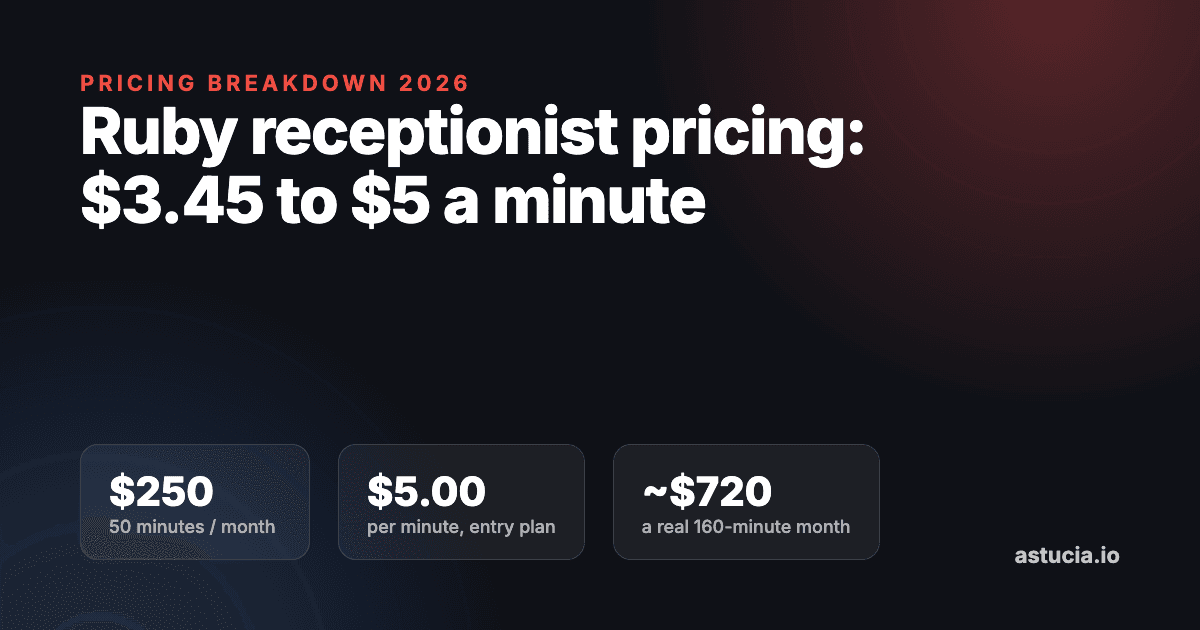
Virtual receptionist services charge in one of two ways: per minute or per call. Either model punishes you for getting more business. A typical virtual receptionist service runs $300-$1,500 per month for basic coverage, with per-minute rates of $1.00-$2.50 that spike during peak hours.
An AI receptionist operates on flat monthly pricing. No per-minute charges. No overage fees when your marketing campaign drives a spike in calls. No premium rates for after-hours coverage. Your cost stays predictable regardless of volume.
For a small business handling 300 calls per month, the math is stark:
- Virtual receptionist: $750-$1,800/month (at $2.50-$6.00 per call)
- AI receptionist: Flat monthly rate — same price whether you get 100 calls or 1,000
According to Harvard Business Review, businesses adopting AI for customer-facing roles see average cost reductions of 40-65% compared to human-staffed alternatives.
2. Availability: Always On vs Shift-Based
Virtual receptionists work shifts. Even services advertising "24/7 coverage" rely on rotating staff — and coverage quality drops significantly during nights, weekends, and holidays. Staffing shortages mean longer hold times. Holiday coverage costs extra. And if your virtual receptionist calls in sick, you might not know until leads start complaining.
An AI receptionist answers every call on the first ring, every hour of every day. No shift changes. No holiday surcharges. No staffing gaps at 2 AM when a homeowner's pipe bursts and they're desperately searching for a plumber.
For businesses where after-hours lead capture matters — and it does for most service businesses — this difference alone justifies the switch.
Free Resource
Free Call Script Pack
Calculate your missed-call revenue loss and get 12 proven call scripts for AI receptionists.
Download Free3. Business Knowledge: Trained AI vs Script-Reading Agents
This is where the AI receptionist vs virtual receptionist gap widens dramatically.
A virtual receptionist works from a basic call script. They can answer simple questions, take messages, and transfer calls. But ask them about your specific service packages, whether you serve a particular zip code, or how your scheduling works? They're stuck reading from a limited document or putting the caller on hold.
An AI receptionist trained on your business knows everything you teach it — every service, every FAQ, every policy. Callers get immediate, accurate answers that build trust and move them toward booking. No holds, no callbacks, no "let me check on that."
Astucia's AI Receptionist takes this further with custom persona training. Your AI doesn't just know the answers — it delivers them in your brand voice, creating a consistent experience that represents your business the way you want.

4. Scalability: Unlimited Capacity vs Human Limits
Virtual receptionist services hit a wall during volume spikes. When your Google Ads campaign takes off or a storm drives 50 calls to your roofing company in an hour, human agents get overwhelmed. Hold times spike. Quality drops. Leads get frustrated and call your competitor instead.
An AI receptionist handles 1 call or 100 simultaneous calls with identical quality and speed. Scaling costs nothing extra. Your busiest day performs exactly like your quietest — which is exactly how it should work.
This scalability also matters for growing businesses. As your call volume increases from 100 to 500 to 1,000 calls per month, a virtual receptionist service reprices you into higher tiers. An AI receptionist scales with you without punishing your growth.
Businesses switching from virtual receptionists to AI receptionists report handling 3x more calls per month at less than half the cost.
5. Consistency and Integration
Virtual receptionists are human — which means variability. Different agents answer differently. Turnover rates at call centers run 30-50% annually, so your callers interact with new people constantly. Some agents are sharp. Others are distracted, tired, or having a bad day.
An AI receptionist delivers the exact same quality on every call. And it integrates directly with your business tools — calendar, CRM, notification systems — to book appointments, log leads, and trigger follow-ups automatically. No manual handoffs. No leads lost between the phone message and your CRM.
When paired with Astucia's AI Chatbot, your phone and web leads flow into one unified inbox. Every inquiry gets captured, qualified, and routed — whether the customer called, texted, or chatted on your website.
AI Receptionist vs Virtual Receptionist: Which Saves More Time
Beyond cost, the time savings deserve attention. A virtual receptionist takes a message and emails it to you. You then need to read the message, call the lead back, and hope they answer. This loop adds hours of admin work every week — and leads go cold during the delay.
An AI receptionist eliminates the loop entirely. It answers the question, books the appointment, or qualifies the lead in real time during the call. Your team gets notified with a fully logged, actionable lead instead of a voicemail transcript. For busy small business owners, this operational efficiency is often more valuable than the cost savings alone.
When a Virtual Receptionist Still Makes Sense
To be fair, virtual receptionists haven't lost all their advantages. For businesses that handle emotionally charged calls — crisis counseling, sensitive legal matters, complex medical intake — human empathy still matters. If fewer than 10% of your calls are routine, a human service may be worth the premium. If you're considering replacing a full-time in-house hire rather than a virtual service, our AI receptionist vs human receptionist comparison covers that cost calculation in detail.
But for the vast majority of small businesses where 80-90% of calls are questions, appointment requests, and basic inquiries, an AI receptionist outperforms on every practical metric.
The Bottom Line: AI Receptionist vs Virtual Receptionist in 2026
The data points in one direction. AI receptionists cost less, work more hours, deliver consistent quality, scale without limits, and integrate with your business tools — all areas where virtual receptionists fall short. For small businesses that want professional phone coverage without unpredictable costs, AI is the clear winner.
The virtual receptionist industry served businesses well for years. But in 2026, paying per-minute rates for human agents who work from generic scripts is a hard sell when AI can do it better, faster, and cheaper.
Making the Switch from Virtual to AI Receptionist
If you're currently paying for a virtual receptionist service, the transition is straightforward. Most businesses switch within a week. The process looks like this:
- Share your business knowledge — services, FAQs, processes, scheduling rules
- Train and test — your AI receptionist learns your business and gets tested on real scenarios
- Go live — forward your business line and start handling calls immediately
- Optimize — review call logs and refine responses based on actual caller interactions
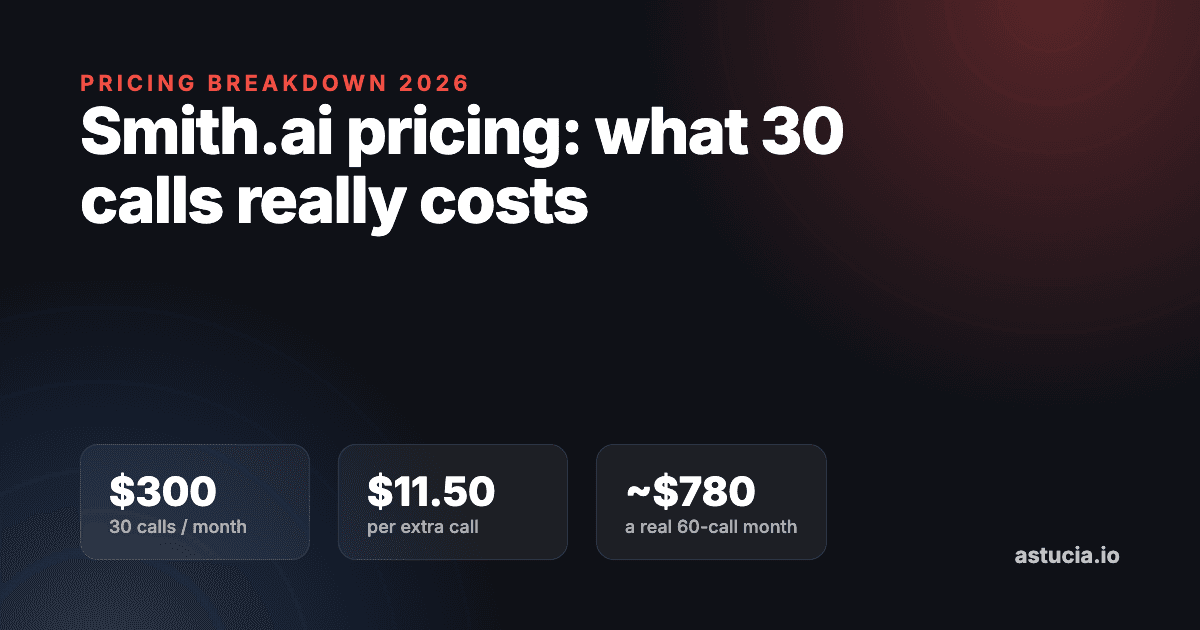
The Smith.ai alternative comparison breaks down how Astucia stacks up against one of the most popular virtual receptionist services on the market.
Ready to stop paying per-minute rates for inconsistent call handling? Book a free demo to hear your AI receptionist in action.
Keep Reading
- Complete Guide to AI Receptionists — Everything you need to know about AI receptionists for small business
- AI Receptionist vs Human Receptionist: 5 Cost Facts — How AI compares to a full-time hire in salary, coverage, and ROI
- How Much Does an AI Receptionist Cost? 2026 Pricing Breakdown — Detailed pricing breakdown so you can budget with confidence